
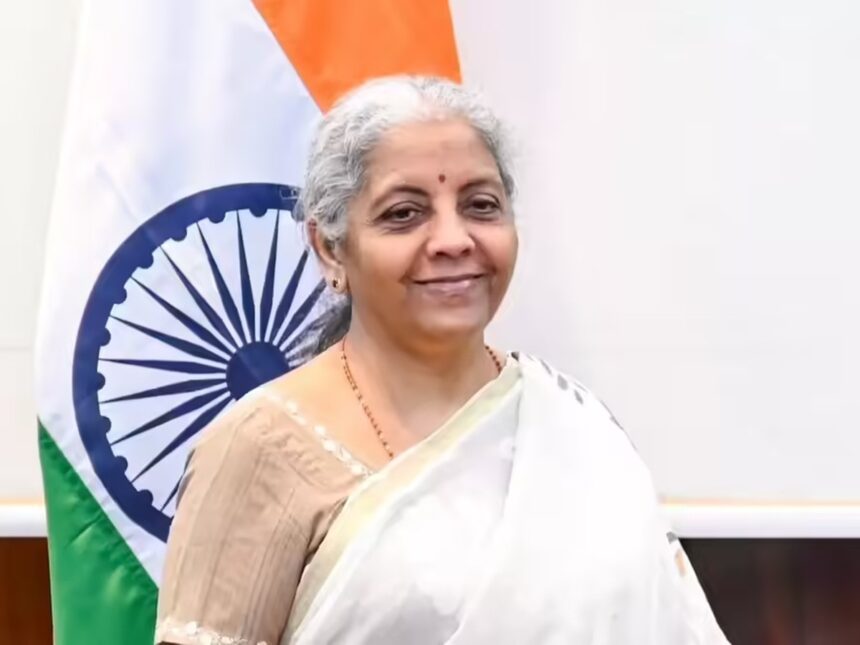
Finance Minister Nirmala Sitharaman has called on public sector banks (PSBs) to rethink how they engage with young Indians and make banking more accessible, personalised and digitally convenient.
Speaking at the concluding session of the two-day PSB Confluence 2026 in New Delhi, Sitharaman asked state-owned lenders to connect with young customers much earlier in their financial lives and remain relevant as their needs evolve.
She proposed launching a month-long ‘Banking for Youth’ campaign from October 2, aimed at improving the appeal of public sector banks among younger customers while maintaining responsible and prudent banking practices.
From Campus to Career: PSBs Asked to Build Long-Term Relationships
Sitharaman said banks should not view opening a young person’s first account as a one-time transaction. Instead, PSBs should build relationships that continue through important financial milestones — from college and the first job to higher education, entrepreneurship, investments and wealth creation.
She noted that public sector banks continue to carry the image of being traditional “government banks”, which can make them less attractive to younger customers compared with private lenders.
The Finance Minister encouraged PSBs to speak directly with young people and understand what they expect from modern banking services.
‘Don’t Be Uncool’: Sitharaman Challenges Public Sector Banks
Sitharaman recalled conversations with young people who said they preferred private banks because they appeared more “cool”.
She urged public sector lenders to address that perception without compromising the discipline and prudence expected from financial institutions.
Her message was straightforward: PSBs need to understand what makes a banking service attractive to young customers and incorporate those expectations into their customer experience.
The proposed approach could include greater use of digital services, personalised offerings and youth-oriented communication.
Take Banking Services Directly to Colleges
The Finance Minister also asked public sector banks not to wait for young customers to visit branches.
Instead, banks should establish a stronger presence at colleges, universities, skill-development centres and other educational campuses.
The proposed ‘Banking for Youth’ campaign could include:
- On-campus account-opening initiatives
- Financial literacy and awareness programmes
- Direct interaction with students and young professionals
- Information on loans, investments and other financial products
- Guidance on entrepreneurship and credit facilities
Sitharaman said PSBs should aim to become the first and most trusted banking choice for young Indians.
Youth-Focused Banking Desks and ‘Yuva Kiosks’
To make branches more welcoming to younger customers, Sitharaman suggested creating dedicated spaces such as ‘Yuva Kiosks’ or ‘Yuva Banking Mitra’.
A designated employee could assist young customers in understanding bank accounts, credit products, digital banking and other financial services.
She also proposed lifestyle-oriented benefits that could appeal to younger consumers, including discounts or vouchers linked to fitness centres, yoga facilities and credible mental-wellness platforms.
Banks Could Partner With Educational Platforms
Sitharaman also suggested that PSBs provide free online educational material in partnership with reputed institutions and learning platforms.
Such content could cover financial management as well as education, skill development, entrepreneurship and career-related opportunities.
Another proposal was a common digital portal or application for young customers, potentially coordinated through the Indian Banks’ Association (IBA). The platform could bring together information on banking services, education, skilling, entrepreneurship and financial opportunities.
Focus on Credit Scores and Responsible Borrowing
The Finance Minister stressed that financial literacy should also include a better understanding of the formal credit ecosystem.
PSBs were asked to educate young Indians about credit scores, loans, responsible borrowing and government-backed credit schemes.
Greater awareness could be particularly useful for young entrepreneurs seeking formal financing to establish or expand their businesses.
Sitharaman also emphasised the importance of maintaining a healthy credit history and using borrowed money responsibly.
Why Youth Banking Matters for India
India has one of the world’s youngest populations, and its younger generation will play an increasingly important role in shaping consumption, savings, investment and entrepreneurship.
Sitharaman said financial awareness should develop alongside adulthood rather than becoming something young people have to learn under pressure when they receive their first salary or begin managing larger financial responsibilities.
The broader objective is to help young Indians become financially capable from an early stage while creating stronger, longer-lasting relationships between them and public sector banks.
What Was Discussed at PSB Confluence 2026?
The two-day PSB Confluence 2026, organised by the Department of Financial Services under the Ministry of Finance, brought together representatives from public sector banks, public financial institutions, government departments and industry experts.
The second day featured discussions on several key areas, including agriculture and horticulture value-chain infrastructure, priority-sector lending and the future of credit cards.
Participants also discussed digital onboarding, cross-selling opportunities for existing customers and the potential created by the RuPay-UPI integration.
Another major area of discussion was financing across agriculture and horticulture value chains, including farmer producer organisations, storage, processing, logistics and market connectivity.
With the proposed youth-focused initiatives, the government is pushing PSBs to combine their traditional strengths in trust and reach with a more modern, digital and customer-focused approach to banking.