
Modi Government Picks Infosys Co-Founder to Lead Technology-Driven Reforms of India’s Exam System
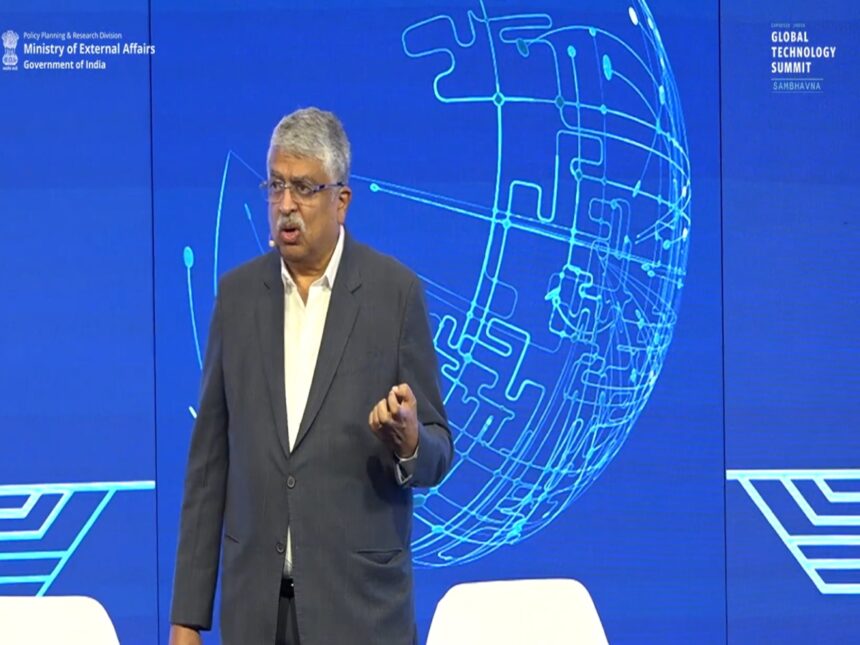
In a move highlighting its focus on expertise over political background, the Narendra Modi-led government has appointed Infosys co-founder Nandan Nilekani to a high-level task force responsible for reforming the National Testing Agency (NTA). The decision is particularly noteworthy as Nilekani had contested the 2014 Lok Sabha elections on a Congress ticket before returning to his work in technology and public policy.
His appointment reflects the Centre’s emphasis on bringing experienced professionals into critical governance roles, especially as it seeks to restore public confidence in India’s competitive examination system following recent controversies.
From Politics to Public Technology Leadership
Nandan Nilekani joined the Congress Party in March 2014 and contested the Bengaluru South Lok Sabha seat, where he lost to BJP leader Ananth Kumar by more than 2.28 lakh votes.
However, long before entering electoral politics, Nilekani had established himself as one of India’s most respected technology leaders. The UPA government had appointed him as the founding chairman of the Unique Identification Authority of India (UIDAI), where he played a pivotal role in developing and implementing the Aadhaar digital identity programme.
More than ten years later, the Modi government has once again entrusted him with a major national assignment, indicating that his technical expertise and experience in building large-scale digital infrastructure have taken precedence over past political affiliations.
Government Treats NTA Reform as a Technology and Governance Challenge
Nilekani’s inclusion comes as the Centre prepares a comprehensive overhaul of the National Testing Agency after several competitive examinations, including NEET, came under scrutiny over allegations of irregularities and paper leaks.
The composition of the newly formed six-member committee suggests that the government sees the issue as much more than an education-sector problem. Instead, it is approaching the reforms as a combination of technology, governance, cybersecurity, and institutional accountability.
Rather than relying only on education experts and bureaucrats, the government has assembled specialists from multiple fields, including digital technology, space science, intelligence, cybersecurity, public administration, and higher education.
Experts from Diverse Fields Join the Reform Panel
Each member of the task force has been selected for their specialized knowledge and experience in managing large-scale national systems.
Nandan Nilekani
Nilekani is expected to contribute his expertise in digital public infrastructure, secure identity verification, and scalable technology platforms. His experience with Aadhaar is likely to help develop secure and transparent digital examination systems capable of handling millions of candidates.
S. Somanath
Former ISRO Chairman S. Somanath brings decades of experience in leading complex scientific missions that require precision, operational efficiency, and highly reliable systems. His background is expected to support the design of robust and dependable examination infrastructure.
Tapan Deka
Former Intelligence Bureau Director Tapan Deka adds a strong security perspective to the panel. His expertise in intelligence operations and counter-terrorism could prove valuable in developing mechanisms to prevent organised cheating, question paper leaks, and cyber-enabled examination fraud.
V. Kamakoti
As Director of IIT Madras, computer scientist V. Kamakoti specializes in artificial intelligence, cybersecurity, and indigenous computing technologies. His role is expected to strengthen the technological resilience of India’s digital examination ecosystem.
Anita Karwal
Former Union Education Secretary Anita Karwal contributes extensive experience in school and higher education administration. Her understanding of India’s education system is likely to help ensure that proposed reforms remain practical, implementable, and aligned with existing policies.
Amrit Lal Meena
Senior bureaucrat Amrit Lal Meena is known for his expertise in public administration, infrastructure development, and project execution. His focus is expected to be on coordinating large-scale implementation across states and examination centres.
A Clear Message Beyond Education Reform
The makeup of the committee sends a broader signal about the government’s approach to governance. By bringing together a former Congress candidate, a former ISRO chief, an ex-Intelligence Bureau director, senior bureaucrats, and top academicians, the Centre appears to be prioritizing professional expertise over political considerations.
The diverse backgrounds of the panel members also indicate that the government intends to address the NTA’s challenges through structural reforms rather than temporary administrative measures.
Focus on Secure, Transparent Examination Systems
The committee is expected to recommend measures aimed at modernising India’s examination process by strengthening cybersecurity, preventing paper leaks, improving digital infrastructure, increasing institutional accountability, and enhancing the overall transparency of competitive exams.
For the Modi government, which has consistently promoted digital governance and technology-driven public services, the task force represents an important step toward rebuilding trust in India’s examination system.
Nandan Nilekani’s appointment further reinforces the message that when it comes to major national reforms, proven expertise and institutional experience can outweigh past political affiliations. His selection demonstrates the Centre’s willingness to rely on accomplished technocrats to drive complex governance initiatives with long-term national impact.