
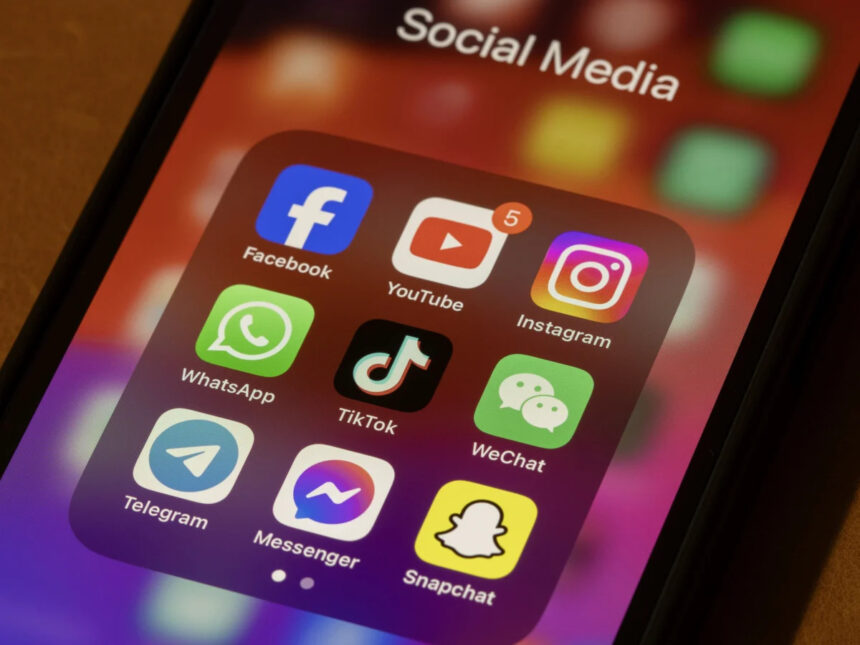
The European Union is moving closer to introducing stricter rules on children’s access to social media following a new expert report that highlights the growing impact of platforms like TikTok, Instagram, and other social media apps on young people’s mental health.
Speaking at a press conference, European Commission President Ursula von der Leyen said the findings make it clear that stronger age-based protections are needed to safeguard children online.
“It is not simply about whether children can use social media,” she said. “The real question is when—and under what conditions—social media platforms should be allowed to reach children.”
New Study Raises Concerns Over Children’s Social Media Use
The report, prepared by child psychologist Dr. Jörg M. Fegert and epidemiologist Dr. Maria Melchior, examined how social media affects children and teenagers across Europe.
According to the study, many children spend between four and six hours every day using social media platforms.
Researchers also found that nearly 60% of young users showed signs of emotional and social development challenges linked to excessive social media use. The reported effects included:
- Sleep disturbances
- Difficulty concentrating
- Higher levels of anxiety
- Increased symptoms of depression
- Greater vulnerability to mental health problems
The authors concluded that prolonged exposure to social media may have significant consequences for children’s overall well-being.
Experts Recommend Age-Based Social Media Restrictions
Based on their findings, researchers proposed several measures to better protect young users.
Their recommendations include:
- Children under 13 should only access social media under the supervision of a parent or teacher.
- Teenagers aged 13 to 18 should only be allowed to use platforms that include built-in safety measures, such as limits on endless scrolling and other addictive features.
- Children under the age of three should avoid screen exposure entirely.
The recommendations aim to encourage healthier digital habits while reducing the potential psychological effects of excessive screen time.
More Countries Are Tightening Social Media Rules
Europe is not alone in considering stricter controls for children’s online activity.
Australia became the first country to introduce legislation banning children under 16 years of age from accessing social media platforms.
Several European nations, including France, Germany, and Spain, are also exploring similar measures to strengthen online child safety.
In the United States, Florida introduced a law in 2024 restricting social media access for children under 14, unless parents provide approval.
Enforcement Remains a Major Challenge
While age restrictions are gaining support, critics argue they may be difficult to enforce.
Many believe children can bypass age limits by providing false birth dates or creating fake accounts, making verification one of the biggest challenges for regulators.
To strengthen compliance, Australia recently announced plans to double the maximum penalties for social media companies that fail to enforce minimum age requirements. Companies could face fines of up to AUD 99 million (approximately USD 68 million) for violating the law.
EU Could Introduce the World’s Largest Child Social Media Regulation
If the European Union decides to adopt similar legislation, it would represent the largest coordinated effort to regulate children’s access to social media globally.
The EU has a population of approximately 450 million people, including an estimated 81 million individuals under the age of 18.
However, introducing bloc-wide legislation will require agreement among all 27 EU member states, meaning negotiations and implementation could take considerable time.
EU to Review Recommendations Before Drafting New Rules
The newly released report is expected to play a significant role in shaping future European digital policy.
Ursula von der Leyen said growing scientific evidence about the effects of social media on children is strengthening the case for introducing a minimum age for access to online platforms.
The European Commission will now review the report and its recommendations before preparing a legislative proposal, which is expected to be presented after the summer.
If approved, the new rules could reshape how children across Europe interact with social media and set a new global benchmark for online child safety.