
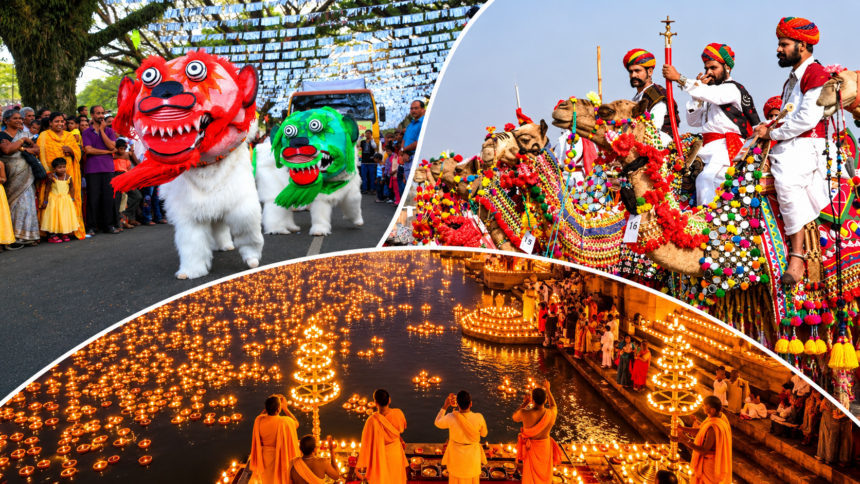
Winter is one of the most exciting times to explore India, not just for its pleasant weather but also for the colourful festivals celebrated across the country. From camel fairs in Rajasthan and spectacular celebrations along the Ganga to traditional masked dances in the Himalayas, India’s winter festival calendar offers something for every kind of traveller.
Whether you enjoy cultural celebrations, religious traditions, local food or unique travel experiences, these festivals offer an opportunity to discover different parts of India’s heritage. Here are five fascinating winter festivals in India, including their dates, major attractions and travel options.
5 Winter Festivals in India to Add to Your Travel List
1. Pushkar Camel Fair, Rajasthan
Dates: 17–24 November 2026
The famous Pushkar Camel Fair transforms the desert town of Pushkar into a lively cultural destination. Thousands of camels and other livestock gather here, making it an important event for traditional animal trading, folk performances and local competitions.
The fair also takes place around Kartik Purnima, adding religious significance to the celebrations through sacred rituals and activities.
Why You Should Visit:
- Camels decorated with colourful blankets, beads and tassels.
- Traditional Rajasthani folk music and dance performances.
- Local competitions and cultural activities.
- A unique combination of rural traditions and religious celebrations.
How to Reach:
By Road: Pushkar is approximately 145 km from Jaipur, with a journey of around 2.5–3 hours via NH48. Delhi is about 400 km away, requiring approximately 7–8 hours by road. Travelling from Mumbai or Kolkata by road is considerably longer, making flights or trains more convenient.
By Train: Ajmer Railway Station is the closest major railway station, located around 14 km from Pushkar. Trains from Jaipur take approximately 2–2.5 hours, while the Delhi-Ajmer Shatabdi offers a journey of around 6.5 hours. Mumbai has direct train connections to Ajmer, including the Aravali Express, taking approximately 16–18 hours. Trains from Kolkata generally take 24 hours or more.
By Flight: Jaipur is the main airport for reaching Pushkar, approximately three hours away by road. Kishangarh Airport is closer but has limited flight connectivity. Direct flights to Jaipur are available from Delhi, Mumbai and Kolkata.
2. Dev Deepawali, Varanasi, Uttar Pradesh
Date: 24 November 2026
Often described as the Diwali of the Gods, Dev Deepawali is among the most spectacular religious celebrations in India. Celebrated in Varanasi, the festival transforms the city’s historic ghats into a glowing spectacle as thousands of oil lamps illuminate the banks of the Ganga.
The reflections of countless diyas on the river create a beautiful atmosphere, while the evening Ganga Aarti adds to the spiritual significance of the occasion.
Why You Should Visit:
- Thousands of diyas lighting up the historic ghats.
- Beautiful floating lamps across the Ganga.
- The traditional evening Ganga Aarti.
- An opportunity to experience the celebrations from a boat on the river.
How to Reach:
By Road: Varanasi is approximately 800 km from Delhi, with a journey of around 12–14 hours. Kolkata is approximately 680 km away, requiring around 11–12 hours. Travelling from Jaipur and Mumbai by road is less practical because of the distance.
By Train: Varanasi Junction (Cantt) has railway connections with all four major cities. The Vande Bharat from Delhi takes approximately eight hours, while overnight trains are also available. Direct trains from Mumbai, including the Mahanagari Express, take around 24–28 hours. Kolkata is connected through trains taking approximately 12–14 hours. Direct train options from Jaipur are also available, although the journey is relatively long.
By Flight: Lal Bahadur Shastri International Airport is approximately 25 km from Varanasi city centre. Direct flights connect Varanasi with Delhi, Mumbai and Kolkata, with journey times of around 1.5–2.5 hours. Travellers from Jaipur may need to take a connecting flight through Delhi.
3. Cochin Carnival, Fort Kochi, Kerala
Dates: December 2026, leading up to New Year’s Eve
Cochin Carnival brings a festive atmosphere to Fort Kochi during December, with colourful parades, music, street celebrations and food stalls. The festivities reach their conclusion on New Year’s Eve with the burning of Pappanji, an effigy representing the old year.
The midnight ritual marks the symbolic farewell to the year that is ending and welcomes the arrival of a new one.
Why You Should Visit:
- A lively beachside atmosphere for celebrating New Year’s Eve.
- Colourful street parades and musical performances.
- Local food stalls and public celebrations.
- The traditional midnight burning of Pappanji.
How to Reach:
By Road: Travelling to Fort Kochi by road from Delhi, Mumbai, Jaipur or Kolkata is a lengthy journey because of the distance. Other transport options are more convenient.
By Train: Ernakulam Junction is the main railway station, located approximately 12 km from Fort Kochi. Trains from Mumbai take around 24–26 hours, while journeys from Delhi and Kolkata can take approximately 40–48 hours. Travellers from Jaipur may require a connecting journey, making air travel a more practical alternative.
By Flight: Cochin International Airport is approximately 45 km from Fort Kochi, with a taxi journey taking around 1.5 hours. Flights from Mumbai take approximately two hours, while those from Delhi and Kolkata take around 3.5 hours. Travellers from Jaipur can check direct flight availability or consider connecting flights through Delhi or Mumbai. From Ernakulam, visitors can reach Fort Kochi by taxi or ferry.
4. Tibetan Losar Festival, Spiti, Himachal Pradesh
Date: February 2027
Losar marks the Tibetan New Year and is celebrated by Himalayan Buddhist communities with traditional prayers, religious ceremonies and ceremonial offerings.
In Spiti, the festival offers visitors an opportunity to experience Buddhist traditions and monastery celebrations. Some monasteries also organise Cham dances, in which performers wear traditional masks and costumes while presenting ritual dances.
Why You Should Visit:
- Traditional masked Cham dance performances.
- Religious ceremonies and monastery celebrations.
- A peaceful New Year experience in the Himalayas.
- An opportunity to explore Spiti during its quieter winter season.
How to Reach:
By Road: Winter travel to Spiti requires careful planning because snowfall can affect road connectivity. During this period, the Shimla-Kinnaur route towards Kaza is generally the accessible option, while the Manali route usually closes after heavy snowfall.
Delhi to Shimla is approximately 350 km and takes around 7–8 hours. From Shimla, Kaza is another 410 km away, requiring approximately 12–14 hours of driving. Travellers are advised to divide the journey into smaller sections, with Kalpa or Sangla serving as possible overnight stops. Hiring a 4×4 vehicle is recommended, and road conditions should be checked before departure.
By Train: Travellers can take a train to Kalka and continue to Shimla through the toy train or by taxi. Another option is to reach Chandigarh and continue by road. The Shatabdi from Delhi to Kalka is a convenient option. Visitors travelling from Mumbai, Kolkata or Jaipur can first reach Delhi or Chandigarh.
By Flight: Spiti does not have its own airport. Chandigarh is generally the preferred airport for reaching the region, although travellers can also fly to Delhi before continuing by road. Shimla and Bhuntar airports have limited flight services.
5. Faguli Festival (Festival of Masks), Tirthan Valley/Kullu, Himachal Pradesh
Dates: January–March 2027
The Faguli Festival is a traditional Himalayan celebration known for its unusual costumes and ritual performances. During the festival, villagers wear distinctive wooden masks and costumes made from grass while performing traditional dances.
According to local beliefs, these performances help drive away evil spirits and welcome spring after the harsh winter season.
The exact dates of the festival are not fixed and generally depend on local lunar cycles, solar transitions and the calendars followed by village deities (devtas).
Why You Should Visit:
- Unusual wooden masks and traditional grass costumes.
- Ancient ritual dances and local cultural traditions.
- An opportunity to experience village celebrations away from major tourist crowds.
- Scenic views of the Himalayan valleys.
How to Reach:
By Road: Kullu is approximately 500 km from Delhi, with a journey of around 12–14 hours. Overnight Volvo buses operate between Delhi and Kullu or Manali. From Aut, travellers can continue towards Tirthan Valley by road. Visitors from Jaipur can travel through Delhi or Chandigarh, while those from Mumbai and Kolkata can first fly to Delhi or Chandigarh.
By Train: There is no direct railway connection to Kullu. Travellers can take a train to Chandigarh or Kalka and continue by road towards Aut, which takes approximately 7–8 hours. The Shatabdi from Delhi to Chandigarh or Kalka is a convenient option. Visitors from Mumbai, Kolkata and Jaipur can look for direct trains to Chandigarh or travel through Delhi.
By Flight: Bhuntar Airport near Kullu is the closest airport, although flight services are limited and weather-dependent. Direct flights from Delhi may be available when services are operating. Otherwise, travellers can fly to Chandigarh and continue by road. Visitors from Mumbai, Kolkata and Jaipur can also reach Delhi or Chandigarh before proceeding to Kullu.
Essential Travel Tips Before Attending Winter Festivals in India
Planning ahead can make your winter festival trip more comfortable, particularly when travelling to popular destinations or remote mountain regions.
Book accommodation and transport in advance, especially for Dev Deepawali in Varanasi and the Cochin Carnival in Kerala, when visitor demand can be high.
Pack according to your destination. Carry warm clothing and suitable winter essentials when travelling to Spiti or Himachal Pradesh, while lighter cotton clothing is suitable for the warmer southern regions.
For festivals such as Faguli and Losar, check the confirmed local celebration dates before finalising your travel plans. Weather conditions and road accessibility should also be considered when visiting Himalayan destinations.
Conclusion
India’s winter festivals offer travellers a chance to experience the country’s diverse traditions, cultural heritage and regional celebrations. From the colourful camel gatherings of Pushkar and the illuminated ghats of Varanasi to the New Year celebrations in Kerala and traditional masked dances in Himachal Pradesh, every destination offers a different experience.
Whether you prefer religious celebrations, cultural performances or peaceful mountain destinations, these five winter festivals are worth considering for your next holiday. Plan your journey in advance, confirm the festival dates and prepare for an unforgettable winter travel experience.