
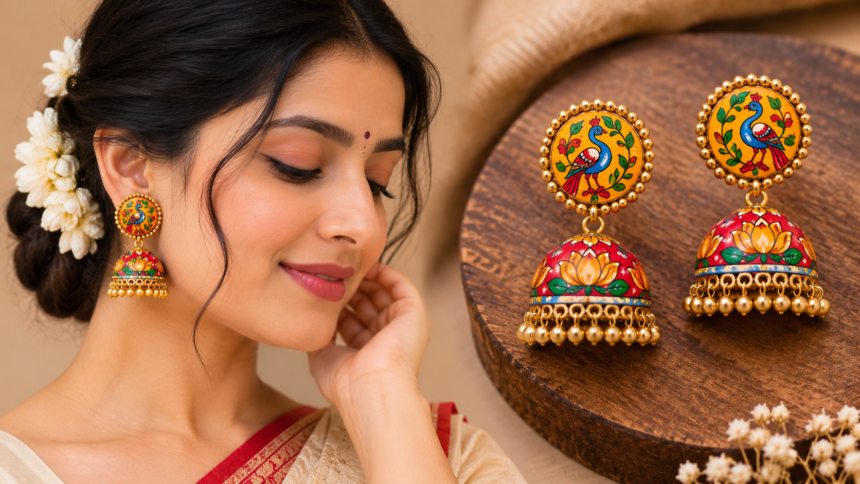
Traditional Indian handicrafts are finding a place in modern fashion, and Bihar’s centuries-old Tikuli art is gaining attention through colourful, hand-painted jhumka earrings. Known for its intricate designs, vibrant shades and detailed artwork, this traditional craft is now becoming a popular choice for festive and wedding-season accessories.
Tikuli-inspired jhumkas stand out because of their miniature paintings, featuring flowers, fish, peacocks and village scenes. Once associated mainly with bindis, decorative boards and wall hangings, the art form has gradually made its way into contemporary jewellery. These lightweight earrings offer an interesting alternative to conventional gold and Kundan designs.
What Is Tikuli Art? Exploring Bihar’s 800-Year-Old Craft
Tikuli art originated in Patna, Bihar, and has a history dating back around 800 years. The name is associated with the traditional bindi worn on the forehead. In its original form, artisans created small glass discs, decorated them with hand-painted designs and added gold-toned foil detailing to produce decorative forehead ornaments.
Over the years, the craft expanded beyond traditional Tikulis. Artists began applying the same techniques to wooden surfaces, trays and decorative wall pieces.
Nature and everyday village life remain important sources of inspiration for Tikuli paintings. Common designs include peacocks, fish, trees, flowers and figures influenced by Mithila art. Bright colours such as red, yellow and green, combined with delicate outlines, give these creations their distinctive appearance.
The detailed and compact nature of the artwork eventually made it suitable for jewellery, particularly statement earrings.
How Tikuli-Inspired Jhumkas Became Popular
Tikuli art experienced a decline before artisans and craft organisations in Bihar began efforts to revive the traditional technique. These initiatives helped introduce the craft to audiences beyond the state.
Social media further contributed to its growing popularity. Small businesses and handmade jewellery sellers started showcasing close-up photographs of painted Tikuli jhumkas, attracting customers interested in distinctive accessories.
Fashion creators also began pairing these earrings with cotton sarees, kurtas and even jeans. Their versatility helped move Tikuli jewellery beyond traditional wedding and festive occasions, making it suitable for everyday styling as well.
Since the designs are handmade, individual pairs can feature slight differences, adding to their appeal among people who appreciate traditional craftsmanship.
How to Style Tikuli Jhumkas for Different Occasions
Tikuli-inspired earrings can complement both traditional and contemporary outfits. They look particularly appealing with cotton, linen, handloom and plain silk sarees. Solid-coloured suits are another suitable choice, allowing the painted designs to stand out.
For a coordinated appearance, choose a single colour from the earrings, such as mustard, green or red, and incorporate it into your blouse, dupatta or bindi.
Since the jhumkas already attract attention, keeping the neckline simple helps maintain a balanced look. Hairstyles such as buns, braids and ponytails can also highlight the earrings.
For casual outings, Tikuli jhumkas can be paired with simple black, white or pink outfits. Whether you prefer an open hairstyle or a neatly tied bun, these colourful accessories can add an artistic touch to an otherwise minimal look.
How to Clean and Store Tikuli Jhumkas
Because Tikuli earrings feature delicate painted surfaces, proper care is important to maintain their appearance.
After wearing them, gently clean the earrings with a soft, dry cloth. Avoid using water, soap or wet wipes, as moisture can affect the painted finish. It is also better to wear the earrings after applying perfume, hairspray and makeup to prevent sprays from damaging or dulling the artwork.
Remove the earrings before changing clothes to avoid accidentally catching them in the fabric. After wearing them for extended periods, wipe away any sweat before storing them.
Keep each pair flat inside a small box with soft lining or in a separate cloth pouch. Avoid placing them loosely inside handbags or storage spaces, as scratches on the painted surface can be difficult to conceal.
Tikuli-inspired jhumkas bring together Bihar’s traditional craftsmanship and contemporary fashion. With their colourful artwork, lightweight designs and versatile styling options, these earrings offer an appealing way to incorporate India’s rich handicraft heritage into everyday and festive dressing.