
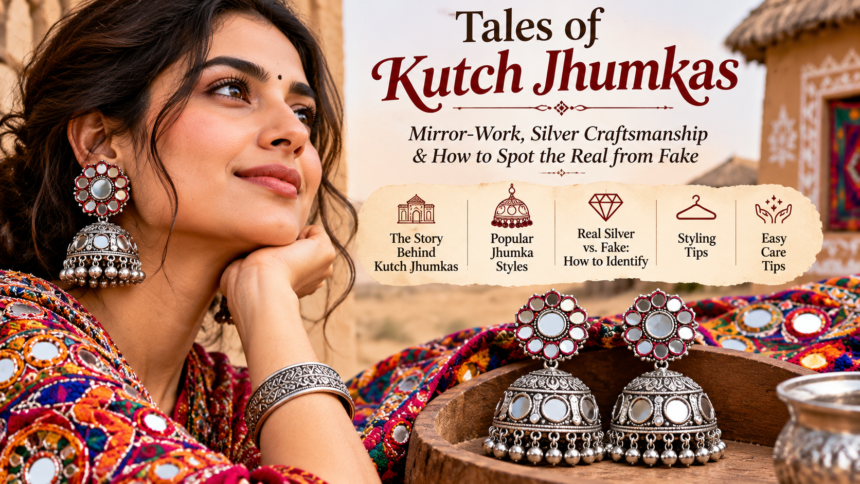
Some jewellery pieces stand out because of their craftsmanship rather than their brand names. Kutch jhumkas are a perfect example, featuring intricate metalwork, tiny mirrors and traditional detailing inspired by Gujarat’s rich cultural heritage.
Known for their distinctive appearance, these earrings bring together traditional artistry and colourful designs. They can complement a simple cotton kurta, a festive saree or even a basic white shirt with denim. Their versatility makes them an interesting addition to both traditional and contemporary wardrobes.
From understanding their origins to learning how they are made and identifying genuine silver craftsmanship, here is everything you need to know about Kutch mirror-work jhumkas.
The History and Craftsmanship Behind Kutch Jhumkas
The Kutch region of Gujarat has a long-standing tradition of handmade crafts, particularly mirror embroidery, locally known as abhla bharat. This traditional technique involves stitching small mirrors onto fabrics used for clothing, bags and decorative wall hangings.
Over time, the distinctive mirror-work aesthetic also became part of local jewellery designs. Artisans and silversmiths began incorporating mirrors into earrings, necklaces and anklets, creating pieces that reflected the region’s traditional style.
Silver jewellery was commonly worn as part of everyday dressing rather than being reserved exclusively for weddings and special occasions. Small mirrors offered an attractive decorative element without requiring expensive gemstones.
This combination of silver, detailed metalwork and reflective mirror pieces gives Kutch jewellery its characteristic bold yet earthy appearance.
What Makes Kutch Mirror-Work Jhumkas Different?
The most noticeable feature of Kutch jhumkas is their detailed mirror decoration. Small, round mirrors or glass pieces are arranged within the metalwork, often in clusters that reflect light from different angles.
The metal generally features a darker, antique silver appearance. The dome-shaped portion of the earrings is often decorated with engraved floral patterns, dots and geometric designs. Small hanging beads or tassels are commonly added to the lower section, while some designs also incorporate colourful threadwork.
These traditional details give Kutch jhumkas their distinctive identity and separate them from ordinary oxidised earrings.
Kutch Silver vs. Regular Oxidised Jhumkas: How to Identify Authentic Pieces
Oxidised jhumkas have become widely available, with many designs produced in factories in large quantities. Although these earrings may resemble traditional Kutchi jewellery from a distance, examining their craftsmanship can help identify the differences.
Authentic Kutchi silver jewellery generally feels solid and substantial. Its engraved patterns may contain slight irregularities because the detailing is created by hand. The mirrors should sit securely within their frames without moving or appearing loose.
In comparison, mass-produced jewellery is often lighter and features repetitive patterns with a highly uniform finish. Cheaper pieces may also use black paint or coatings to create an oxidised appearance, which can gradually wear away.
Before purchasing, ask the seller about the place of manufacture and the jewellery’s origin. If you are buying a silver piece, check for a hallmark or request a purchase bill. Genuine artisans are generally willing to explain their craftsmanship and the time involved in creating a particular design.
Popular Kutch Jhumka Designs and Styling Ideas
Kutch jhumkas are available in different shapes and designs, making them suitable for both everyday outfits and festive occasions.
The traditional dome-shaped jhumka remains one of the most recognisable styles. It usually features a rounded, engraved upper section, mirror detailing and a row of tiny hanging elements.
Chandbali-inspired designs offer another attractive option. Their half-moon shape, decorated with mirrors along the curved section, makes them particularly suitable for sarees and traditional outfits.
For everyday wear, smaller stud-style jhumkas provide a more subtle appearance. Meanwhile, layered designs featuring two or three tiers of mirrors are ideal when you want your earrings to become the main highlight of your outfit.
Some designs also feature colourful thread tassels in shades such as red, yellow and blue, adding a festive touch to traditional jewellery.
How to Style Kutch Jhumkas with Modern Outfits
One of the biggest advantages of Kutch mirror-work earrings is their ability to complement different clothing styles. With the right outfit combination, these traditional accessories can also create an interesting fusion look.
| Outfit | How to Style Kutch Jhumkas | Styling Tip |
|---|---|---|
| Plain cotton kurta or solid kurta set | Choose colourful mirror-work jhumkas as the main accessory | Keep the rest of the look simple and avoid heavy necklaces |
| White T-shirt and denim jacket | Add mirror-work earrings for a bohemian touch | Let the earrings remain the highlight |
| Handloom cotton or linen saree | Choose a saree in a subtle shade to highlight the mirrors | Tie your hair up or tuck it behind your ears |
| Festive outfit | Pair the earrings with a bright Bandhani dupatta | Keep other jewellery minimal to maintain balance |
Easy Care Tips to Maintain Your Kutchi Silver Jhumkas
Silver jewellery naturally develops a darker appearance over time, which is a normal part of the tarnishing process. However, proper storage and regular care can help maintain the appearance of your Kutch jhumkas and protect their mirror detailing.
After wearing them, gently wipe the earrings with a soft, dry cloth to remove surface residue. Avoid exposing them to perfume, hairspray and water, as these can affect the metal and decorative elements.
Store your earrings separately in a soft pouch or jewellery box to prevent the mirrors from scratching against other accessories. Keeping them inside a zip pouch can also help slow down tarnishing.
Avoid soaking mirror-work jhumkas in silver-cleaning solutions, as these products may damage the mirrors or affect their antique finish. If the jewellery requires deeper cleaning, it is better to take it to a trusted jeweller.
With their traditional mirror detailing, handcrafted appearance and versatile designs, Kutch jhumkas continue to bring regional artistry into modern fashion. Choosing carefully crafted pieces and maintaining them properly can help preserve their distinctive beauty for years.