
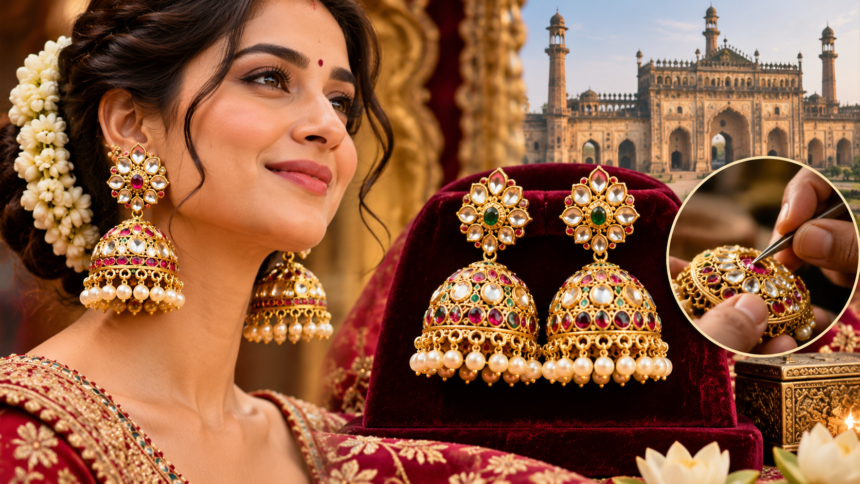
Some jewellery pieces carry memories, traditions and family stories across generations. Jadau jhumkas from Uttar Pradesh are among those timeless accessories. Known for their elaborate designs, rich appearance and traditional craftsmanship, these earrings have long been a favourite in Indian bridal jewellery collections. Often passed down from mothers and grandmothers, a pair of jadau earrings can hold as much sentimental value as it does cultural significance.
From their royal beginnings to their place in modern bridal fashion, jadau jhumkas continue to remain an important part of traditional Indian jewellery. Here is a closer look at their history, craftsmanship, popular designs and styling ideas for the wedding season.
From Royal Courts to Bridal Collections: The History of Jadau Jewellery
The origins of jadau craftsmanship in India are associated with the Mughal period. The Mughals are believed to have introduced Persian-inspired techniques of setting precious stones into gold. The style soon gained popularity among royal jewellers, who developed elaborate designs to suit the tastes of wealthy patrons.
In Uttar Pradesh, regions such as Awadh and cities including Lucknow and Varanasi played an important role in shaping the traditional jewellery aesthetic. Royal influences encouraged intricate detailing, rich stonework and elaborate gold designs.
Gradually, jadau jewellery moved beyond royal households and became popular among affluent families. It started finding a place in wedding collections and bridal trousseaus, eventually becoming a treasured family possession. Even today, many families in Uttar Pradesh consider jadau jewellery an heirloom that can be passed down through generations.
What Makes Uttar Pradesh’s Jadau Jhumkas Special?
Jadau jhumkas are recognised for their detailed stone settings and distinctive traditional appearance. Unlike jewellery with widely spaced embellishments, these earrings feature closely arranged stones that create a rich, layered look.
Many designs incorporate uncut stones or polki, complemented by gold settings that give the jewellery a warm, understated finish rather than an overly polished appearance.
Another characteristic detail is the intricate work on the reverse side of the earrings. This often includes meenakari, an enamel-work technique that adds colour and decorative detailing. Although it may not always be visible to others, this craftsmanship gives the jewellery an additional layer of beauty.
How Artisans Create Jadau Jhumkas
Making a pair of jadau jhumkas involves several stages of detailed handwork. The process begins with a design sketch, which guides the goldsmith in shaping the gold base.
Once the foundation is ready, artisans use lac, a natural resin, to secure the stones. Each stone is carefully positioned, followed by the application of thin gold foil around it to hold it firmly in place.
After completing the stone-setting process, the jewellery is polished and the reverse side may be decorated with meenakari work.
Several artisans may contribute to the creation of a single pair. Depending on the complexity of the design, the process can take anywhere from a few days to several weeks. The handmade nature of the craft also means that individual pairs often have slight differences in their detailing.
Jadau vs Kundan vs Polki: Understanding the Differences
Jadau, kundan and polki are often mentioned together when discussing traditional Indian bridal jewellery. Although these terms are closely connected, they refer to different aspects of jewellery-making.
| Feature | Jadau | Kundan | Polki |
|---|---|---|---|
| Meaning | A traditional jewellery-making technique in which stones are set into gold | A stone-setting style that uses pure gold foil | Uncut, natural diamonds |
| Main Focus | Craftsmanship and stone setting | Gold foil used to secure stones | The natural appearance of the stones |
| Back Design | Often features meenakari | Usually plain or simply decorated | Depends on the design |
| Overall Appearance | Rich, layered and traditional | Bright, festive and classic | Natural, raw and softly sparkling |
| Combination | Often incorporates kundan settings | Can be used in jadau jewellery | Frequently used in jadau designs |
These three terms are not necessarily separate jewellery categories. A single pair of earrings can feature all three. Jadau describes the traditional crafting technique, kundan refers to the stone-setting method, while polki identifies the uncut natural diamonds used in the design.
Popular Jadau Jhumka Designs to Know
Jadau earrings are available in several traditional shapes, each offering a different look for weddings and festive occasions.
- Classic Dome Jhumkas: These traditional bell-shaped earrings feature detailed stonework, often finished with small pearl drops along the edges. They remain one of the most recognisable jhumka designs.
- Chandbali Jhumkas: Combining a crescent-shaped upper section with a bell-shaped drop, these earrings create a fuller appearance and are particularly popular for bridal looks.
- Pearl-Drop Jhumkas: These designs feature jadau detailing at the top, with delicate pearl strings hanging below. They offer a softer appearance compared with heavier traditional styles.
- Floral and Peacock Jhumkas: Inspired by nature, these earrings incorporate decorative motifs such as flowers, leaves, lotuses and peacocks.
- Sahara Jhumkas: Designed with an additional chain connecting the earrings to the hair, these elaborate pieces create a dramatic bridal appearance and are generally worn for wedding ceremonies.
How to Style Jadau Jhumkas for the Wedding Season
Since jadau earrings often have elaborate detailing, choosing outfits that complement rather than compete with the jewellery can help create a balanced look. Different designs can be styled according to the occasion.
| Wedding Function | Outfit Suggestions | Recommended Jhumka Style |
|---|---|---|
| Mehndi | Pastel lehenga or sharara | Small dome jhumkas with pearl drops |
| Haldi | Yellow or white cotton suit or saree | Lightweight floral jhumkas |
| Sangeet | Embroidered lehenga or Indo-Western gown | Chandbali jhumkas with swept-back hair |
| Wedding | Red or pastel bridal lehenga or Banarasi saree | Sahara jhumkas or large jadau earrings with a maang tikka |
| Reception | Silk saree or heavily embellished gown | Polki-style jadau jhumkas with a simple neckpiece |
| Wedding Guest | Silk saree or Anarkali suit | Medium-sized dome jhumkas with a small necklace or no necklace |
For pre-wedding celebrations, lighter designs with pearl or floral detailing can complement traditional outfits without making the overall look too heavy. For the wedding ceremony, larger jadau pieces and sahara styles can add a more traditional bridal touch.
Jadau jhumkas are much more than decorative wedding accessories. Their appeal comes from a combination of historical influences, skilled craftsmanship and family traditions. Whether chosen for a bridal trousseau or a festive occasion, these earrings continue to hold a special place in Indian jewellery collections. A thoughtfully selected pair can become a treasured heirloom, carrying its story from one generation to the next.