
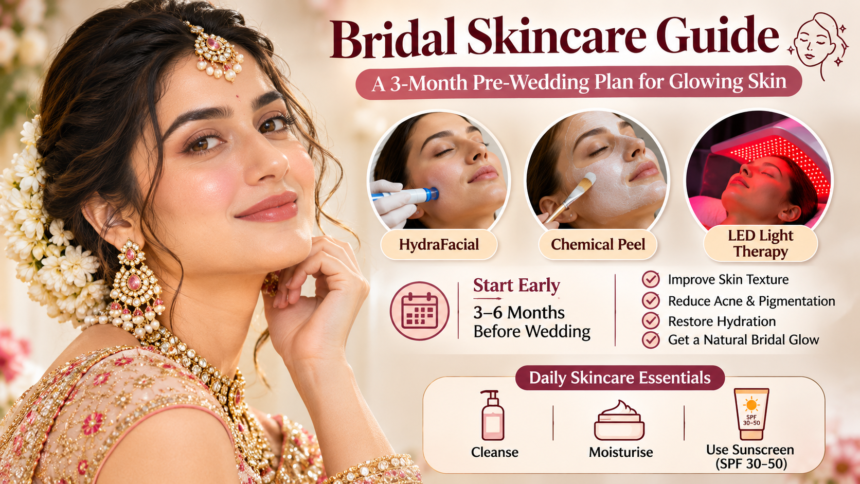
Achieving healthy, radiant skin for your wedding day requires more than a last-minute facial or beauty treatment. With wedding preparations, busy schedules and rising stress levels, brides need a proper skincare routine that allows enough time for their skin to respond to treatments.
Starting early and choosing the right procedures can help address concerns such as acne, pigmentation, acne scars and uneven skin tone. To explain how brides can prepare their skin safely, Dr Mehak Gupta, Assistant Professor, Department of Dermatology, Noida International Institute of Medical Sciences (NIIMS), shares expert advice on pre-wedding skincare, suitable dermatological treatments and common mistakes to avoid.
From deciding when to begin your skincare journey to selecting treatments according to your skin type, here is a guide to preparing for your bridal glow.
When Should Brides Start Their Pre-Wedding Skincare Routine?
Ideally, brides should begin their skincare journey three to six months before the wedding. This gives dermatologists sufficient time to evaluate the skin, identify specific concerns and recommend suitable treatments.
Brides dealing with acne, pigmentation, scarring or uneven skin tone should preferably start around six months in advance, as these conditions may require multiple treatment sessions to show improvement.
For those who begin their skincare preparations just one month before the wedding, gentle and low-risk procedures are a better option than aggressive treatments. Allowing enough recovery time is important to avoid unexpected skin reactions close to the wedding day.
Which Pre-Bridal Skin Treatments Are Safe and Effective?
Several dermatological procedures can help improve skin hydration, texture and overall appearance before the wedding. Depending on individual skin requirements, brides may consider HydraFacial, hydrating facials and LED light therapy.
These treatments can help reduce dullness, improve hydration and give the skin a fresher appearance within a relatively short period. However, even treatments generally considered gentle may cause irritation in certain individuals.
The choice of procedure should always depend on the bride’s skin type, existing concerns and tolerance. Consulting a dermatologist before starting any treatment can help minimise the chances of unwanted reactions.
Treatments for Acne, Pigmentation and Uneven Skin Tone
Brides experiencing specific skin concerns may require a more targeted approach rather than relying on regular facials.
For active acne, dermatologists may recommend topical medications, appropriate chemical peels and other targeted treatments. Pigmentation and uneven skin tone may be managed through chemical peels, topical depigmenting products and selected laser procedures.
Acne scars often require specialised treatments, including microneedling or CO2 laser procedures. Since different skin types respond differently to these treatments, a dermatologist should prepare an individualised plan after examining the skin.
Are Pre-Bridal Dermatological Treatments Suitable for Everyone?
Not every skincare procedure is appropriate for all skin types. Although HydraFacial is generally considered suitable for different skin types, people with extremely sensitive or inflamed skin may experience irritation.
Chemical peels need to be selected according to skin type, pigmentation concerns and the presence of inflammation. Laser procedures also require careful assessment before treatment.
Therefore, brides should avoid choosing treatments simply because they are popular or have worked for someone else. Professional guidance is important to determine which procedures are appropriate.
Skincare Mistakes Brides Should Avoid Before Their Wedding
One of the biggest mistakes is trying an unfamiliar or intensive skin treatment shortly before the wedding. Strong chemical peels and laser procedures can sometimes cause redness, irritation, rashes or pigmentation changes.
Brides should avoid experimenting with new treatments close to their wedding date and follow a skincare plan established well in advance. Maintaining healthy, balanced skin should be the priority rather than taking unnecessary risks in pursuit of an immediate glow.
Daily Skincare Routine and Budget-Friendly Pre-Bridal Treatments
Along with professional clinic procedures, maintaining a consistent skincare routine at home is essential for supporting skin health.
In the morning, brides should follow three basic steps: cleansing, moisturising and applying a broad-spectrum sunscreen with SPF 30–50. The evening routine should also include cleansing and moisturising, along with any additional treatments prescribed by a dermatologist.
Introducing multiple new products without professional advice should be avoided, particularly when the wedding date is approaching.
Three Pre-Bridal Treatments for Brides on a Budget
For brides looking for affordable skincare options, Dr Mehak Gupta recommends considering the following treatments, depending on individual skin concerns:
- Hydrating Facial and HydraFacial: These treatments can improve skin hydration and temporarily reduce dullness, helping the skin appear fresher.
- Mild Chemical Peel: When selected according to the skin type, a gentle chemical peel can help address pigmentation and improve skin texture.
- LED Light Therapy: Depending on the type of light used, this treatment may help manage inflammation and acne.
The most suitable option depends on the bride’s skin condition and how well it tolerates the procedure. Rather than combining several treatments without proper evaluation, choosing one appropriate procedure may be a better approach.
Brides should also try any unfamiliar treatment a few weeks before the wedding instead of scheduling it immediately before the big day.
Final Takeaway
Getting a natural bridal glow is a gradual process that requires early planning, consistency and the right dermatological guidance. Starting skincare preparations three to six months before the wedding allows enough time to address concerns such as acne, pigmentation and uneven skin texture.
Treatments such as HydraFacial, mild chemical peels and LED light therapy may be considered according to individual skin requirements. A simple home routine involving cleansing, moisturising and regular sunscreen application is equally important.
Most importantly, avoid experimenting with unfamiliar or aggressive procedures close to the wedding. With a well-planned skincare routine and suitable professional treatments, brides can focus on maintaining healthy skin and feeling confident on their special day.