
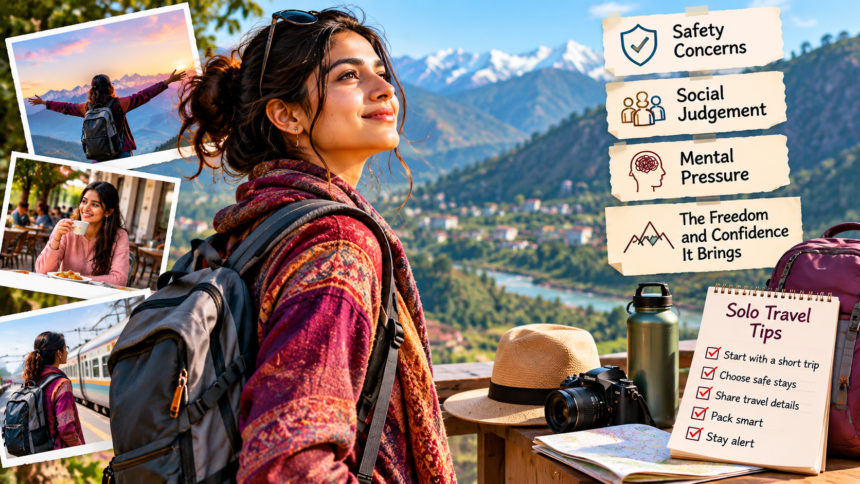
Scrolling through social media late at night, it is easy to come across pictures and videos of women travelling alone, exploring mountains and enjoying new destinations. Their experiences often look exciting and carefree. Many women save these posts, share them with friends and imagine taking a similar trip someday. However, turning that dream into reality can be much more challenging.
For Indian women, solo travel involves more than choosing a destination and booking tickets. Concerns about personal safety, family expectations and social judgement often influence their decisions. While the desire to explore independently continues to grow, several challenges still make travelling alone a difficult choice for many women.
Is Solo Travel Safe for Indian Women?
Safety remains one of the biggest concerns for women planning solo trips. Sometimes, the discomfort comes from everyday situations rather than major incidents. It could be an unfamiliar man staring at them on public transport, an auto driver taking an unexpected route late at night or a hotel receptionist asking unnecessary questions about why they are travelling alone.
Although these situations may not always lead to serious trouble, they can make women feel uncomfortable and cautious.
Such experiences often influence how women move around unfamiliar places. They may think twice before travelling at night, choosing public transport or exploring less crowded areas. As a result, personal safety becomes an important part of almost every travel decision.
Why Do Indian Women Face Social Judgement for Travelling Alone?
Apart from safety concerns, social expectations can also discourage women from travelling independently. Family members may question why they cannot take a friend along, while relatives might consider solo trips an unnecessary way to spend their holidays.
Some women also hear suggestions that travelling alone is something they can do after marriage or that they should wait until someone accompanies them.
The fear of public opinion adds another layer of pressure. For many parents, these concerns come from genuine worries about their daughter’s safety rather than opposition to travel itself. However, balancing family concerns with the desire for independence can be challenging.
The Mental Pressure of Planning a Solo Trip
Travelling alone requires women to think about several details that may otherwise go unnoticed. Before leaving home, they often spend time reading hotel reviews, checking feedback from other female travellers and researching the safety of their chosen destination.
Many also share their live location with trusted people, inform family members about their travel arrangements and prefer flights or trains that arrive during daylight hours.
The precautions continue after reaching the destination. Women remain aware of their surroundings, check whether certain streets are safe to walk through and keep track of their cab details.
This constant attention can make solo travel mentally exhausting. Planning a trip is only one part of the process; preparing for unexpected situations and having alternative arrangements are equally important.
Why Do Women Still Choose to Travel Alone?
Despite the challenges, solo travel continues to appeal to women because it offers independence and an opportunity to spend time with themselves.
One of its biggest advantages is the freedom to make personal choices. Women can decide where to go, what to eat and how to spend their day without adjusting their plans around someone else’s preferences.
Solo trips also provide a break from everyday responsibilities, including office work and family commitments. Spending time in a new environment can offer an opportunity to relax, reflect and enjoy some personal space.
Another important benefit is the confidence that comes from managing things independently. Booking tickets, navigating unfamiliar streets and communicating with new people can help women become more comfortable handling unexpected situations.
Even small achievements, such as finding the correct bus in an unfamiliar city or enjoying a meal alone at a restaurant, can feel rewarding. These experiences often become valuable memories and help women return home with greater confidence.
How to Start Solo Travelling for the First Time
Women who are considering their first solo trip can begin with a short weekend getaway instead of planning an expensive or lengthy international holiday. Choosing a destination located three to four hours away can make the experience easier to manage.
Booking accommodation with positive reviews, particularly from other female travellers, can also help create a more comfortable experience. It is advisable to reach the destination before sunset so there is enough time to settle in and become familiar with the surroundings.
Sharing hotel details, travel schedules and booking information with family members or trusted friends is another useful precaution. It helps keep people informed and provides additional reassurance.
First-time solo travellers should avoid filling their schedules with too many activities. Planning one or two important outings and keeping the remaining time flexible can make the journey more enjoyable.
Trying something independently, such as dining alone at a restaurant, can also help build confidence. What initially feels uncomfortable may gradually become a normal and enjoyable part of travelling alone.
Essential Things to Pack for a Solo Trip
Packing for a solo journey requires some additional preparation. A fully charged power bank is important, as a phone is often needed for navigation, communication and bookings.
Travellers should also carry printed copies of their identification documents and hotel reservations, along with important emergency contact numbers written on paper. These can be useful if the phone battery runs out or the device stops working.
A portable door lock or door stopper can provide an additional sense of security in hotel rooms. Pepper spray may also be considered, but travellers should check the relevant airline regulations before carrying it on a flight.
A basic first-aid kit containing painkillers, bandages and regularly prescribed medicines is another useful addition. A stole or scarf can come in handy during dusty journeys, cold bus rides or visits to religious places.
Keeping some cash separately is also advisable, as card payments and UPI services may not always be available in smaller towns. Before heading out, sharing live location details and accommodation information with a trusted person can provide an additional safety measure.
Final Take
Solo travel is not necessarily about escaping responsibilities or proving independence to others. For many women, it is simply an opportunity to explore new places, enjoy personal time and become more confident.
Although safety concerns and social expectations continue to influence women’s travel choices in India, starting with a small and manageable trip can make the experience less intimidating.
A weekend getaway, a nearby destination and a little preparation may be all it takes to begin. The rest can be discovered along the way.