
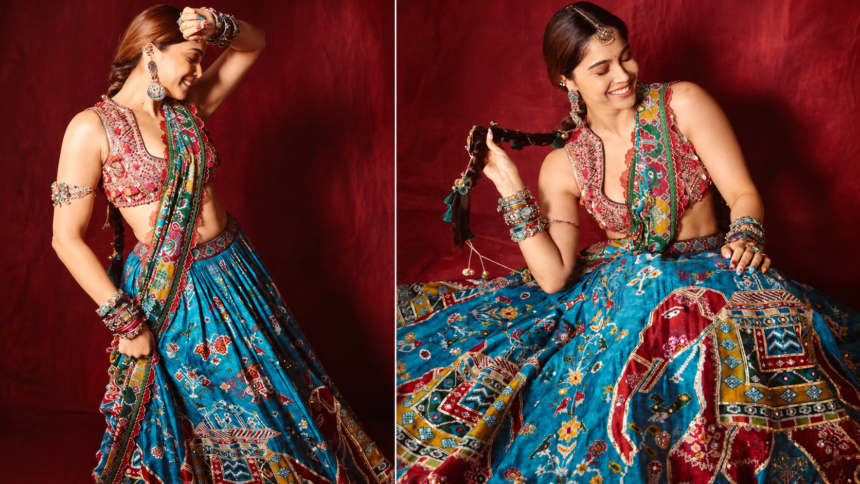
Sharvari Wagh has embraced bold festive fashion with a striking Patola-inspired lehenga from Torani, created especially for Navratri. Featuring vibrant motifs, intricate embroidery, mirror embellishments and cowrie shells, the elaborate ensemble celebrates traditional Indian craftsmanship through a maximalist design.
According to the designer, the outfit took more than 400 hours to complete, with several artisans contributing to its printing, embroidery, stitching and tassel-making. Every element adds to the outfit’s detailed appearance, making it a distinctive choice for the festive season.
Sharvari Wagh’s Patola-Inspired Torani Lehenga: A Closer Look
The lehenga embraces maximalism, with its voluminous skirt covered in colourful patterns and intricate details. The choli and odhni follow the same design approach, ensuring that every part of the ensemble reflects the craftsmanship behind it.
Rather than relying on plain sections, the outfit combines multiple patterns, textures and embellishments. Its bold aesthetic makes it particularly suited to Navratri celebrations, where vibrant colours and statement-making traditional outfits are popular choices.
Which Torani Collection Does Sharvari’s Lehenga Belong To?
Sharvari’s lehenga is part of Torani’s Jogiya collection, which takes inspiration from India’s wandering storytellers, folk musicians and nomadic communities.
The collection also reflects the designer’s connection to his Sindhi roots and the historical exchange of colours, embroidery techniques and craftsmanship between Sindh and Kutch. These cultural influences are reflected in the ensemble’s rich patterns and layered detailing, bringing together different elements of traditional artistry.
Patola Motifs, Mirrors and Cowrie Shells Define the Outfit
The lehenga skirt features a variety of Patola-inspired designs, including the chaupad, or cross motif, trees of life, flowers, butterflies and geometric patterns. These traditional influences are complemented by smaller kitsch-inspired details, including oversized elephant motifs.
According to the designer, the skirt’s panels resemble a moving baraat of elephants, bringing together ideas of celebration, movement and memory. A vermilion-red waistband and matching border featuring pixelated heart-shaped designs introduce another playful detail to the ensemble.
The sleeveless choli features a matka neckline and continues the outfit’s intricate aesthetic through mirrors, cowrie shells, beads and detailed hand embroidery. The skirt also incorporates mirror work, threadwork and decorative tassels, adding depth and texture to the design.
Completing the look is a flowing georgette odhni with a scalloped hem and lattu latkans. These playful hanging embellishments add movement to the outfit, making it suitable for the energy of Garba nights.
Why Did Sharvari’s Torani Lehenga Take Over 400 Hours to Make?
The extensive time required to create Sharvari’s lehenga reflects the amount of handwork involved in its construction. Printing, embroidery, stitching and tassel-making each require specialised skills, with multiple artisans working together to complete the ensemble.
The mirrors, shells and beads contribute to its elaborate finish, while the tassels are individually crafted before being attached to the outfit. Bringing these different techniques together requires considerable time and attention to detail.
The result is a Patola-inspired lehenga that combines traditional motifs with playful embellishments, demonstrating the craftsmanship behind Torani’s festive design.
How to Style a Maximalist Lehenga for Festive Celebrations
With an outfit as detailed as Sharvari’s, keeping the overall styling balanced can help the craftsmanship remain the focus. A neat hairstyle and carefully chosen jewellery can complement the embroidery without competing with the lehenga’s patterns.
Comfortable footwear is also worth considering, particularly when wearing a voluminous skirt for extended celebrations and Garba nights. Those looking to recreate a similar aesthetic can explore lighter fabrics featuring colourful prints and mirror work, allowing greater freedom of movement.
Sharvari Wagh’s Torani lehenga demonstrates how festive fashion can combine traditional influences, intricate handwork and bold design. With more than 400 hours of craftsmanship behind it, the ensemble brings together a story of heritage, colour and celebration in every panel.